


AI systems increasingly describe businesses, creators, and organizations for millions of users. But those summaries often come from algorithmic interpretation rather than verified facts.
Some technologists believe the internet needs new infrastructure that allows websites to define their own identity directly to AI systems.
For most of the internet’s history, people spoke for themselves. Organizations wrote their own mission statements. Businesses described their own services. Creators published their own work.
Now something subtle is changing.
AI assistants are beginning to speak about us instead.
AI Is Becoming The Internet’s Narrator
When someone asks an AI assistant about a company or organization, the assistant often produces a confident summary.
But that summary is usually constructed from scraped information and algorithmic interpretation.
Sometimes it is accurate. Sometimes it isn’t. Either way, a new question emerges: Who gets to define your identity online?
The Power Behind Information
The ability to define reality has always been a form of power.
Governments, media institutions, and technology platforms have all influenced how information spreads and how narratives form. AI introduces a new actor into that system.
Algorithms can now summarize organizations, describe their goals, and present their identity to millions of people. Yet those algorithms interpret information rather than receive it directly from the source.
A Proposal For Digital Self-Representation
One possible solution is emerging from a company called Rootz. Its idea is called the AI Discovery Standard.
The goal is simple: allow websites to publish structured information that AI systems can read directly.
Instead of reconstructing meaning from text fragments, the machine can access a description written by the organization itself.
In principle, that restores a basic digital right: The right to define your own identity.
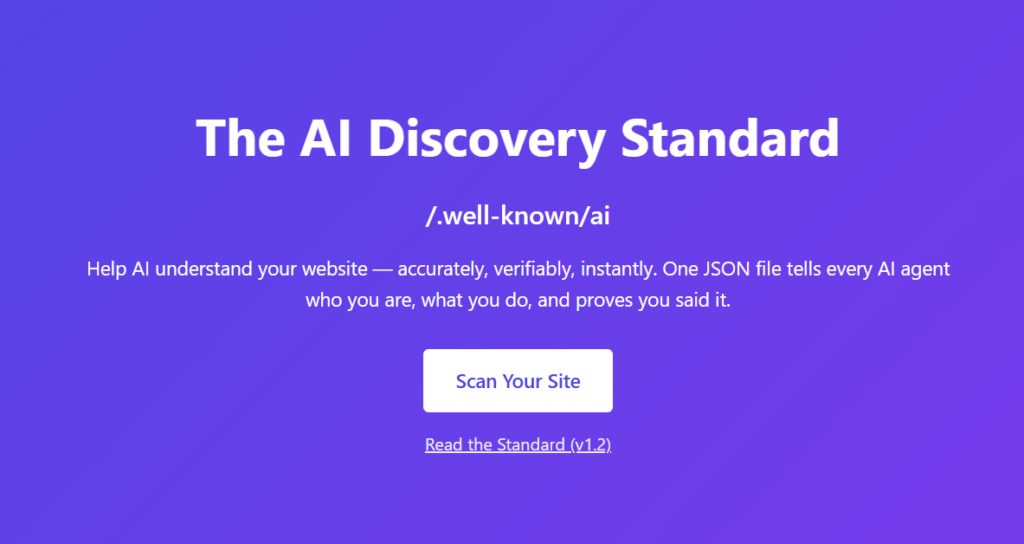
Tools like the Rootz AI Discovery scanner help evaluate how AI systems interpret online information.
Check AI Visibility
Why This Debate Matters
The conversation around AI infrastructure is still in its early stages. But the broader question is already clear.
As AI becomes a gateway to knowledge, societies may need to decide whether:
- Algorithms should interpret identity freely
- Or individuals and organizations should retain the right to define themselves
The answer may shape the future of the internet. Because in the AI era, representation itself may become a digital freedom issue.
The Bigger Conversation We Need To Have
Technology often evolves faster than the social rules around it. AI systems are already shaping how information is presented, summarized, and understood online. Yet society has barely begun to debate who should control those narratives.
Should companies, creators, and organizations have a clear way to present their identities directly to AI systems? Should AI tools prioritize verifiable information from original sources? Or should interpretation remain entirely in the hands of algorithms?
There may not be a single answer. But as AI becomes a central layer of the internet, one principle feels increasingly important.
People should still have a voice in how they are represented.
FAQ
Why do AI systems sometimes get information about businesses wrong?
AI assistants often rely on scraping web pages and interpreting content rather than reading structured data directly from organizations. This can lead to outdated or incomplete summaries.
What is the AI Discovery Standard?
The AI Discovery Standard is a proposed framework that allows websites to publish structured, machine-readable information about themselves so AI systems can interpret their content more accurately.
What does /.well-known/ai mean?
It is a standardized location on a website where machine-readable information can be stored. In the AI Discovery system, it contains structured data describing an organization and its policies.
Why does verifying the origin of information matter?
Verification helps confirm that information actually came from the organization or individual who published it. This can help AI systems distinguish between original sources and third-party interpretations.
Is this approach widely adopted yet?
The concept is still emerging. Tools and standards for AI-readable websites are in early development, and adoption will likely depend on how widely AI systems begin using structured discovery data.
What is digital self-representation online?
Digital self-representation refers to the ability of individuals and organizations to define their own identity and information online rather than relying on third-party interpretations.