

Everyone knows recycling is important, but how much of the waste in your recycling bin actually gets recycled?
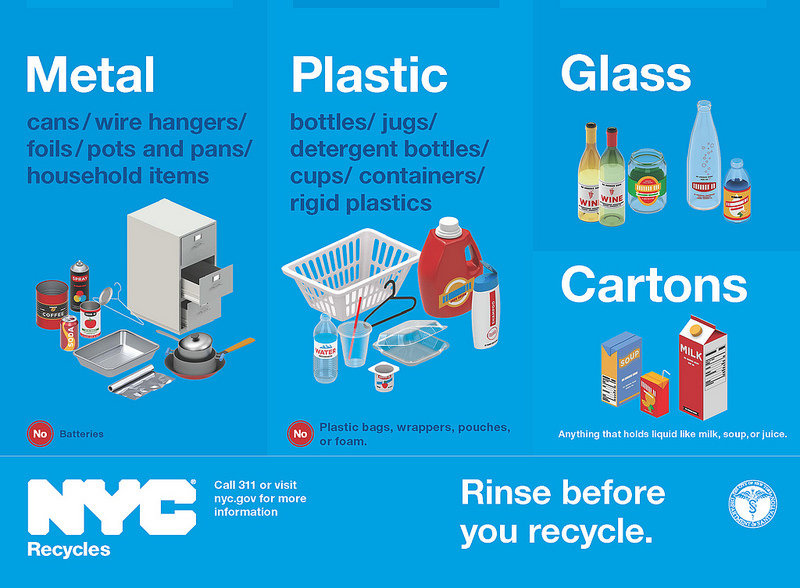
- Metal cans and foil, glass bottles and jars
- Plastic bottles, jugs, tubs, and trays (#1, #2, often #5)
- Cartons, clean paper, and flattened cardboard
- Plastic bags and film, cords, hangers, mixed materials
- Food residue, greasy items, coffee cups
- Broken glass, ceramics, light bulbs, electronics
- Food scraps (including meat and dairy) and food-soiled paper
- Yard waste in a labeled, lidded bin, no black liners
- Trash goes in secure, lidded bins
- Official NYC Bin rollout is underway for smaller buildings
Sadly, New York City only recycles about one-fifth of its garbage: around 8 percent of trash from homes and about 25 percent from businesses, according to the city’s Department of Sanitation. While those numbers are discouraging, this makes it all the more important to correctly recycle the things so they get recycled. If you’ve always been a person who just throws anything you think may vaguely be made of paper and plastic into the recycling bin, it’s time to step it up.
The below information on recycling correctly is taken from NYC.gov.
In 2025, New York City’s recycling and composting rules are evolving fast. Here’s everything you need to know — mandatory programs, fines, record-breaking results, and how to stay compliant.
♻️ Recycling Remains Mandatory — No Major Updates
Classic NYC recycling rules are still in effect:
- Residents must sort metal, glass, plastic, cartons, paper, and cardboard into clear or blue bags—or approved bins.
- Trash goes into black bags within secure, 55-gallon (or less) bins for buildings with fewer than nine units. Larger buildings must follow designated protocols.
- Fines for improper bin use range from $50 for first offense to $200+ for repeat violations.
🌱 Composting Is Now Mandatory — Since April 1st, 2025
Since April, separating food scraps, food-soiled paper, and yard waste is required in all five boroughs. The system runs like recycling — with weekly curbside pickup on your regular recycling day.
- Accepted materials: meat, bones, dairy, pizza boxes, leaves, branches, and certified compostable items.
- Out: wrappers, pet waste, medical supplies, diapers, foam, etc.
Fines — But Not for Everyone, and Enforcement Was Eased
- Enforcement began April 1. Initial fines of nearly 2,000 citations were issued in the first week.
- Small buildings (1–8 units): fines begin at $25, then $50 and up to $100.
- Buildings with 9+ units: fines range from $100 to $300, depending on offense count.
But enforcement on buildings under 30 units is relaxed for now; tickets are limited to repeat offenders in larger buildings.
Composting Hits New Records
Despite initial resistance, compost collection has surged:
- Week 2: 3.8M pounds
- Week 3: 4.5M pounds
- Week 4: 5.24M pounds — up over 500% from last year
- Late May: 5.4M pounds collected in a single week
The program is working because it’s free, simple, and automatic—no sign-up, no hassle.
Compost Giveback & Bin Options
- NYC has opened a fourth compost giveaway site (now in Eastern Queens), adding to existing locations in Brooklyn, Staten Island, and Western Queens. Residents can sign up to collect free finished compost.
- DSNY now offers a 13-gallon compost bin ($38.50) and a 21-gallon option ($43.47) via bins.nyc. Residents may also use their own secure lid bins up to 55 gallons, as long as they’re clearly labeled.
What This Means for You
If you’re a resident:
- Separate food scraps, yard waste, and food-soiled paper into properly labeled, lidded bins.
- Use clear or compostable liners (no black plastic).
- Compost collection happens weekly — on the same day as recycling pickup.
If you’re a landlord or building manager:
- Provide compost bins and a storage area in any building with 4+ units.
- Be aware: if your property receives citations for repeat violations, fines could reach.
Why It Matters
- NYC diverges from past years by matching recycling level simplicity—no sign-up, fewer barricades — but keeps the same no-mess requirements.
- While backlash from landlords and supers continues over workload and logistics, results speak: compost tonnage has exploded, positioning the city to cut waste and emissions.
- Community compost efforts remain strong: the NYC Community Compost Network secured $6.25M in FY25 funding to support BIPOC-centered local compost sites.
Final Take
NYC’s recycling and composting systems are evolving into a streamlined, mandatory model in 2025. The key changes:
- Composting is required, with enforcement started April 1 and escalating fines for non-compliance.
- The program has delivered record-breaking diversion rates, even after scaling back fines.
- Flexible bin rules and community support options make compliance practical for residents.
With sustainability — and sanitation — firmly in focus, NYC’s new system is no longer optional. It’s the new normal.